
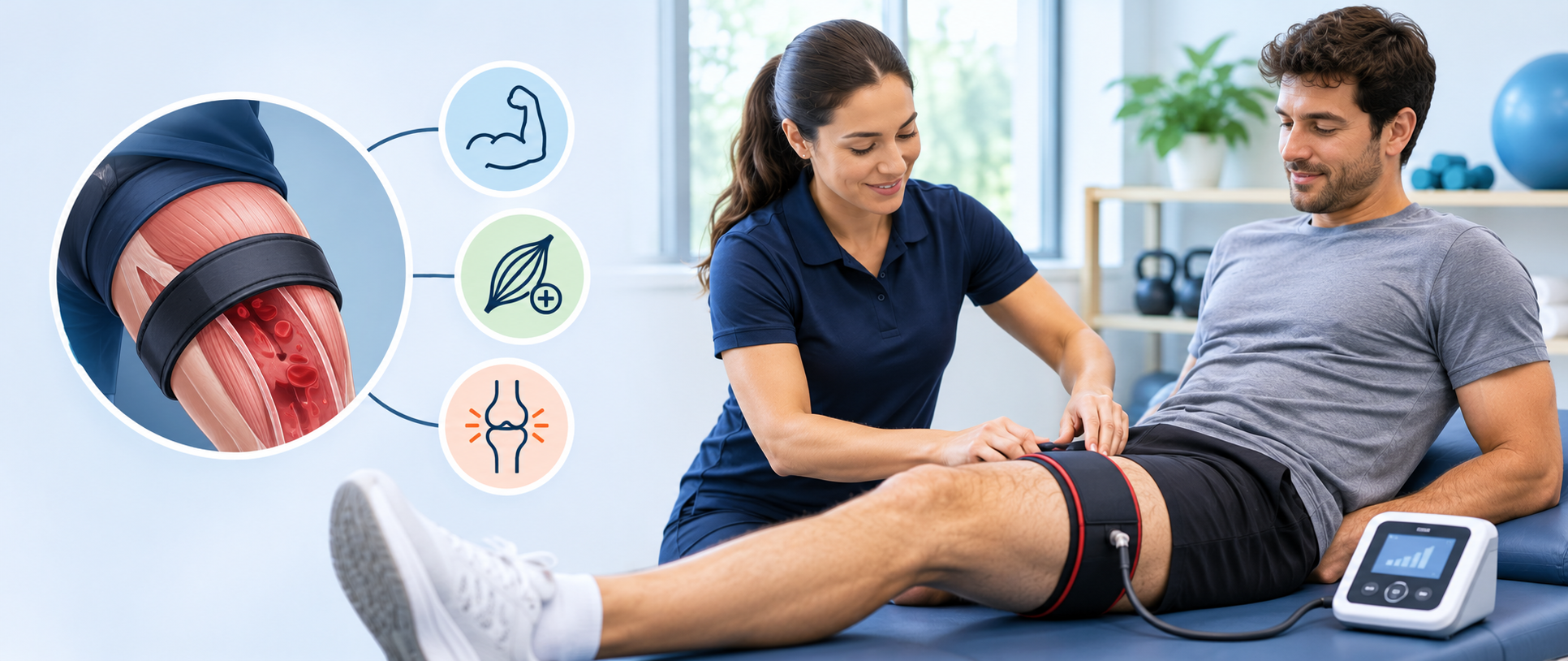
Rebuilding strength after an injury or surgery can be challenging, especially when heavy lifting isn't an option. Blood flow restriction (BFR) training offers an effective way to strengthen muscles using lighter resistance while reducing stress on healing joints and tissues.
Whether you're recovering from ACL surgery, knee replacement, or an injury, BFR physical therapy can help support muscle recovery and a gradual return to movement.
What Is Blood Flow Restriction Training?
Blood flow restriction (BFR) training is a rehabilitation technique that uses a specialized cuff around the upper arm or thigh to control blood flow during exercise.
By partially restricting blood flow into the limb and significantly limiting blood flow out, BFR creates greater muscular demand with lighter weights.
Originally developed in Japan in the 1960s, BFR has become a valuable tool in physical therapy for improving muscle strength without requiring heavy resistance.
Why Physical Therapists Use It
After an injury or surgery, maintaining muscle strength is essential, but traditional strength training may place too much stress on healing tissues.
BFR physical therapy helps patients rebuild strength with less mechanical strain, making it particularly useful during rehabilitation.
Key benefits include:
- Improved muscle strength using lighter resistance.
- Reduced muscle loss during recovery.
- Support for muscle growth without heavy lifting.
- Gradual progression toward normal strength training.
Research suggests that BFR can improve muscle size and strength more effectively than low-load exercise alone.
At Iron Health Physical Therapy, BFR can be incorporated into personalized rehabilitation programs to help patients regain strength, improve mobility, and return to their daily activities.
Where BFR Fits: After ACL Surgery and Knee Replacement
Think of someone recovering from ACL reconstruction. They lose muscle quickly and cannot load the knee heavily. BFR lets them train with light resistance, or even no external load, and still challenge the muscle.
Therapists also consider BFR after procedures such as total knee replacement for a simple reason: the earlier the muscle gets worked, the less mass and strength typically have to be rebuilt later in rehab.
Early research also suggests BFR may improve how muscle uses oxygen and how blood vessels respond, even in short periods. That work is still developing, so treat it as promising, not proven. If you are heading into surgery, read what to expect with total knee replacement for the full rehab picture.
Is BFR Right for You?
BFR training can be a valuable rehabilitation tool, but it isn't appropriate for everyone. A licensed physical therapist should evaluate your medical history, circulation, and recovery goals before recommending treatment.
Individuals with a history of blood clots or certain vascular conditions may not be suitable candidates. Proper cuff placement and individualized pressure are essential for safe, effective treatment.
If you experience unusual pain, numbness, or skin color changes during BFR training, stop and notify your provider. Sudden severe pain, loss of sensation, or a pale or blue limb requires urgent medical attention.
During your evaluation, consider asking:
- Is BFR appropriate for my injury or recovery?
- How will it support my rehabilitation goals?
- When can I transition to traditional strength training?
At Iron Health, our physical therapists assess your individual needs to determine the most appropriate approach to recovery. Learn more about our orthopedic physical therapy services and how personalized treatment can help you move better and regain strength.
FAQs
What does BFR stand for?
Blood flow restriction. It refers to using a cuff to limit blood flow in a working limb during exercise.
Does BFR replace heavy lifting?
Not permanently. It helps build strength when heavy loads are not safe or practical, and a good plan progresses toward normal training.
Is BFR only for athletes?
No. Research has looked at healthy young adults, older adults, and people recovering from injury or surgery.
Who decides if BFR is safe for me?
Your physical therapist and, after surgery, your surgeon. Share your full medical history with both.
Is BFR safe?
When a trained clinician screens your health history and sets the pressure for you, BFR is generally considered safe. It isn't right for everyone, and people with a history of blood clots or certain circulation problems may not be good candidates.
Does BFR hurt?
You'll feel pressure from the cuff and a deep muscle effort during the exercise. It shouldn't cause sharp pain, numbness, or color changes. Tell your PT right away if you notice any of those.
Ask About BFR at Your Evaluation
If you are recovering from knee surgery or an injury and want to know whether BFR fits, book an appointment or call (914) 488-5763. Bring your surgeon's guidelines to your first visit. If pain keeps returning, see your physician.
