

Low back pain is one of the most common causes of musculoskeletal pain in the U.S. and also worldwide. In a given lifetime, the prevalence of low back pain ranges anywhere from 49% to 90%.1 It accounts for roughly 5% of all ER visits in the country and is classified as one of the top 10 reasons for an ER visit.2 One-quarter of patients with an initial presentation of low back pain will experience another exacerbation within a year.3
While rest is important during an initial exacerbation, a nagging symptom associated with back pain is stiffness. Stiffness can interfere with the demands of daily living and limit our functional mobility. Fortunately, there are stretches you can perform to decrease stiffness and maintain motion while you recover. It is important to note that the origin of back pain can vary from person to person; therefore, what works for you may not work for your friend.
1. Cat-Cow
This exercise is great for improving mobility of the thoracic spine as well as lumbar spine by accentuating flexion and extension. To begin, assume the cat position by rounding out your back, tucking your tailbone into a posterior tilt, and looking down at your navel. Next, you will assume the cow position by arching your back, letting your belly fall towards the ground, and looking up. Make sure not to shrug your shoulders during the cat portion.
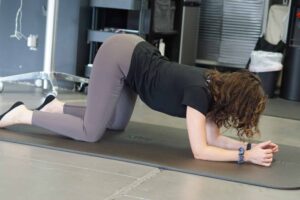
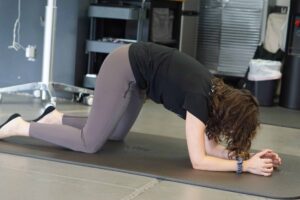
2. Forearm Cat-Cow
For this exercise, it is similar to the traditional cat-cow except you place your forearms on the ground. In this position, you can isolate lumbar spine mobility by locking out your thoracic spine. Instructions are the same for traditional cat-cow except keep a neutral neck position throughout.
3. Figure 4 with Lower Trunk Rotation
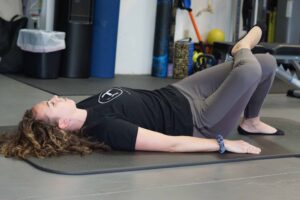
Now that we've covered stretches to improve flexion and extension, it is time to work on rotation! The posterior hip muscles, specifically the piriformis, can stiffen up with low back pain. Figure 4 with lower trunk rotation not only stretches this muscle, but also improves rotation of your lower back. Start on your back with one ankle crossed over the opposite knee. Slowly let your legs fall to one side and maintain that position for 3 to 5 seconds. Then, repeat this exercise to the other side for the same duration. If pain comes on during this exercise, stop right before the point of pain.
Variations
By adding a foam roller under different portions of the lower back, you can add an extra stretch to individual segments of the spine. Feeling light pressure is normal during this variation; however, if pain is experienced with the foam roller, remove it and perform on the ground without the foam roller!
4. Child's Pose
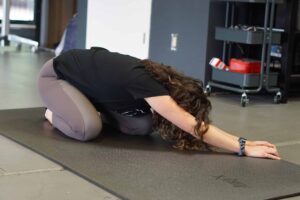
Child's pose is a popular yoga stretch with similar benefits as the cat portion of cat-cow. We start this exercise on the hands and knees and simply sit the butt back towards the heels while maintaining outstretched arms.
Variations
You can bias this exercise towards the right or left for a lateral stretch, especially those with tight quadratus lumborum muscles! Make sure to keep the butt in contact with the heels. The quadratus lumborum tends to be tight and overused in back pain, especially if there are weaknesses in core and hip musculature.
If this position is uncomfortable for the ankles, feel free to add a pillow underneath the feet/shins for support.
5. Sciatic Nerve Glides
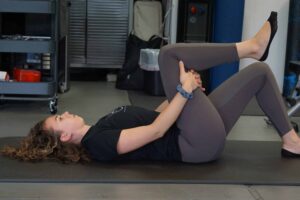
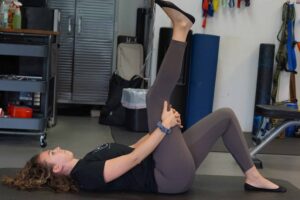
Nerve tension and hamstring tightness are common symptoms associated with back pain. Nerve glides can help increase mobility of the sciatic nerve while also providing a stretch for the hamstring. Start this exercise by laying on your back and hugging one thigh in towards your chest. Keep the opposite leg straight and relaxed on the ground. The steps for this exercise are as follows:
- Straighten the knee.
- Flex the foot.
- Relax the foot.
- Bend the knee back to the starting position.
Tips
If this position provokes back pain, try keeping the opposite knee bent to alleviate low back stress.
Important Tips When Performing These Exercises
- It is recommended that these exercises be performed on the floor, with or without carpeting, or a yoga mat.
- Avoid extremes of these stretching positions if they provoke more pain.
- Pain for the first few reps or sets may be normal; however, if the stretches worsen your pain, please stop the exercise until pain subsides.
- If stretches aren't tolerable and pain persists, you may want to seek medical evaluation to rule out a more serious diagnosis.
As always, frequent exacerbations of pain or pain that doesn't improve may warrant a visit to your Primary Care Physician or Physical Therapist for further evaluation. In the meantime, enjoy this stretching routine to decrease stiffness and pain for the lower back!
References
- Scott N, Moga C, Harstall C. Managing low back pain in the primary care setting: the know-do gap. Pain Res Manag. 2010;15(6):392–400.
- Edwards, J., Hayden, J., Asbridge, M. et al. Prevalence of low back pain in emergency settings: a systematic review and meta-analysis. BMC Musculoskelet Disord 18, 143 (2017). https://doi.org/10.1186/s12891-017-1511-7
- Hoy D, Bain C, Williams G, March L, Brooks P, Blyth F, Woolf A, Vos T, Buchbinder R. A systematic review of the global prevalence of low back pain. Arthritis Rheum. 2012;64(6):2028–37.
FAQs
Should I stretch or rest with lower back pain?
Complete rest is rarely the only answer for uncomplicated back pain. Gentle movement is often useful, but the appropriate activity depends on your symptoms. If movement causes worsening or neurological symptoms, get assessed.
How long should I hold each stretch?
The right hold depends on the movement and your symptoms. This page uses short, comfortable holds rather than asking you to force a long stretch. Follow the specific dosage beside each exercise.
Can stretching make back pain worse?
Yes. A movement can be poorly matched to the cause or stage of your symptoms. Stop or reduce a stretch if pain becomes sharper, travels farther down the leg, or remains worse after the session.
Is walking good for lower back pain?
Walking is often a useful low-impact way to keep moving, but the right amount depends on your symptoms and overall health. Start with a manageable duration and increase gradually if your symptoms remain stable.
How long until stretches help?
Some people feel temporary relief quickly, while others need a broader strength and movement program. If symptoms persist, recur frequently, or limit normal activities, an assessment can identify what needs to change.