
Do you feel horrible pain when you straighten your knee under load? Hitting the gym after the pandemic and returning to a regular routine has been quite a dreadful transition for many people. They were used to sitting and lying down for long hours, and very few maintained their mobility routine.
All of this put individuals on resting mode and demanded very little flexibility in their bodies.
Now returning to the gym, individuals have started to train vigorously to shed all the extra pounds they gained during the lockdown.
Recently, the most common injury suspected in individuals is “Runner’s knee.”
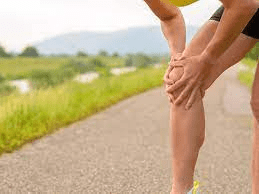
Runner’s knee is a broad umbrella term that describes pain at any number of locations and types of pain for one of several conditions that cause discomfort around the kneecap/patella region.
As the name suggests, Runner’s knee frequently occurs in runners in their running career. However, this injury is not limited to runners only. It is a common clinical condition that occurs in patients of all ages and activity levels.
Any strenuous activity that stresses the knee joint could be a cause of this condition. For instance, activities such as:
- Skiing
- Jumping
- Playing basketball, football, or cricket
- Performing vigorous exercises in the gym
The pain of runner’s knee is felt anteriorly around the kneecap. It is characteristically dull aching pain above, below, or behind the kneecap. Some patients experience swelling around the knee joint, and you may also feel cracking, popping, or grinding feeling or sensation within the knee.
All of these symptoms are caused by irritation of soft tissue and lining around the knee. This indicates that you may have worn or torn cartilage and strained tendons.
Runner’s knee is often diagnosed as patellofemoral pain syndrome, patellar tendonitis, fat pad syndrome, iliotibial band syndrome, and traction apophysitis.
In all of these conditions, the following symptoms are evident:
- Pain
- Inflammation
- Muscle imbalance
- Muscle instability of extensor component of the knee
Causes of Alteration in Biomechanics While Running
There could be several musculoskeletal factors that lead to runner’s knee, such as:
- Poor quadriceps and hamstrings flexibility
- Weakness in glutes and hips
- Poor biomechanics when running
- Impaired calf strength
- Limitation in hip extension strengthening
Tips to Prevent Knee Pain While Running
There are several reasons why your knees could be hurting. Without proper information and clinical diagnosis, we will be only guessing the general cause of knee pain.
Runner’s knee is a clinical entity in patients of all ages. However, there are specific measures that you can take to prevent knee pain during running.
- Gradually increase training volume and intensity.
- Follow the 10% rule; never increase your training volume and intensity by more than 10% per week. It’s a good rule of thumb across all sports, including swimming, cycling, running, and workouts you are performing in the gym.
- In the beginning, you should run 3 or 4 times per week.
- Give your body some days off to heal from soreness and DOMS.
- Incrementally increase the duration of exercise. If you are currently running 20 minutes at a steady pace, then the following week you’d run 25 minutes.
- Try shifting from heel strike to midfoot strike.
- Taking short, quick strides helps in maintaining a steady aerobic pace while running.
- Maintain good posture while running.
- Try to improve your running form. Poor biomechanics while running causes anterior rotation of the pelvis.
- Look at your feet and do not overpronate them. Always go for shoes that have adequate stability and provide comfort for you.
- Strengthen the muscles around the thigh, knee, and calf.
- Work on hip and core strengthening.
- If your glutes and hamstrings are tight, they shift the pelvis posteriorly, developing a slightly noticeable posterior tilt. This ultimately results in abnormal shifts in the orientation of the muscles.
- Put a pillow in between your knees while sleeping.
How to Run With Knee Pain?
You must be thinking that the internet is filled with articles saying don’t run with knee pain, and here I am discussing tips and tricks on how to run with knee pain. By just correcting your improper form and posture while running, treat pain quickly.
Well, first of all, abrupt cessation of any daily activity will affect your strengthened muscles badly. In our knees, we have muscles that are hypertrophied and muscles that are in their normal state. The excessive load-bearing is done by muscles that are increased in mass.
The imbalance in muscle occurs due to training error in intensity, volume, and poor posture. Altering the intensity and reducing the number of days and exercises are helpful in treating pain equally. You can alleviate pain while running by:
- Shortening stride length
- Widening your gait (maintains normal Q angle)
- Increasing cadence
Running With Pain in Adolescents
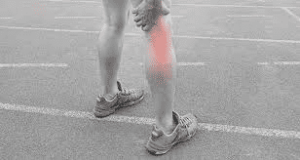
The prominent cause of knee pain in adolescents is traction apophysitis or Sinding-Larsen-Johansson disease. These conditions occur when excessive load is placed on the growth plates at the patella’s tibial tubercle and inferior pole, resulting in pain and inflammation around the knee joint.
Both conditions occur in patients who are undergoing a growth spurt. The pain shows a linear relationship with activity. Thus, an increase in activity increases the pain in the knee joint. It is tender and painful on palpation.
Simply reducing the load on soft tissues around the knee and incrementally increasing the load over a period of months give enough time to the tissues to heal. In addition to this, incorporating exercises into the daily routine helps treat pain effectively.
Running With Pain in Adults
If you feel a sharp, shooting pain on the lateral side of the knee superior to the lateral femoral condyle, then it’s most likely to be a peripheral nerve entrapment. It is often misdiagnosed with iliotibial tract syndrome as the course of pain is along with the iliotibial band.
The pain of the nerve is differentiated based on the nature of pain, as the patient describes sharp, shooting, and burning pain. Injury to the nerve is often associated with trauma or surgery. This sort of injury is primarily seen in ballet dancers.
Exercises and Stretches to Relieve Knee Pain While Running
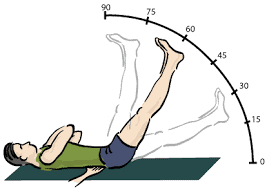
Straight Leg Raises
- Lay down on the back (in supine position).
- Bend the other knee.
- Raise the leg till end range.
- Increase range in every set.
- Perform 20 repetitions in 3 sets.
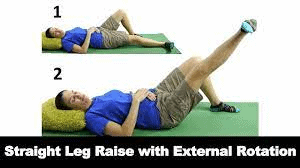
Straight Leg Raise With Foot Out
- This is an alteration in the SLR to target the vastus medialis muscle.
- Put your foot out in external rotation.
- Raise the leg till end range.
- Perform 20 repetitions in 3 sets.
Hamstring Stretch
- Put a chair or stool in front of you.
- Keep your back straight.
- Put your affected leg on the chair.
- Bend your hips forward.
- Perform 10 repetitions in 3 sets.
Quad Stretch
- Hold the chair with one hand for support.
- Take the unaffected leg and bend it.
- Hold it in place for 10 seconds with your hand on the same side.
- Perform 10 repetitions in 3 sets.
Side-Lying Hip Abduction
- Turn into a side-lying position on the unaffected side.
- Bend the unaffected leg.
- Lift your affected leg up towards the ceiling and then back.
- Perform 20 repetitions in 3 sets.
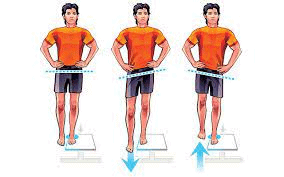
Hip Hikes
- Stand in a good posture.
- Lift your unaffected leg.
- Keep both hands on your waist.
- With the affected leg, move your hip up and down.
- Perform 10 repetitions in 3 sets.
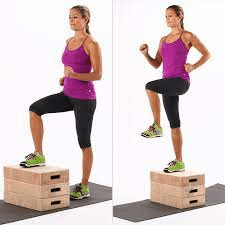
Box Steps
- Keep a box on the floor.
- Laterally step up and down on the box.
- Perform 10 repetitions in 3 sets.
Conclusion
The knee is a complex joint; it bears 80% of body weight. While running, increasing mileage and fast-paced aerobic activity stresses out the joint.
Many novice runners use improper biomechanics between limbs and within limbs while running.
With proper exercise according to your condition and type of pain, along with good knowledge of your impaired biomechanics, this sports injury can be treated effectively.
FAQs
Why do I feel pain in my knee after running?
Running changes load on the knee and surrounding tissues, and pain can appear when training load exceeds what your body currently tolerates. Training changes, strength, recovery, footwear, running mechanics, and other factors can all contribute.
Do I have a meniscus tear?
Knee pain alone cannot confirm a meniscus tear. Locking, catching, swelling, or pain after a twisting injury may warrant an evaluation, but diagnosis requires a clinical assessment.
How long does knee pain take to heal?
Recovery time varies with the cause, severity, training load, and how consistently the contributing factors are addressed. Persistent or worsening symptoms should be assessed rather than assigned a fixed healing timeline.
Should I ice my knee?
Cold can temporarily reduce discomfort for some people, but it does not identify or fix the cause of knee pain. Use symptom relief alongside appropriate load management and rehabilitation when needed.
Do knee braces help?
A brace can be useful for certain conditions, but the right type and indication depend on the diagnosis. A brace should not be used to justify continuing a training load that is making symptoms worse.
Can new running shoes fix knee pain?
Shoes can change comfort and running feel, but changing shoes is not a guaranteed treatment. If pain started after a training change, investigate the training load as well as footwear.