Your knee feels puffy after a hard leg day or a long run, and you're not sure if that's just your body working or a sign that something's actually wrong. That uncertainty is common, and it's usually resolved by understanding what your knee is telling you.
In most cases, mild swelling after activity is a normal inflammatory response. But swelling that keeps coming back, sticks around for days, or shows up alongside pain, stiffness, or instability is a different story, and one where knee swelling physical therapy can make a real difference before the problem gets worse.
Why Your Knee Swells After a Workout
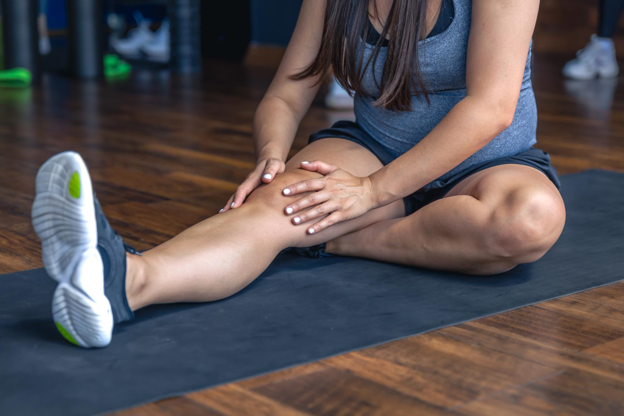
Swelling is your body's repair response. When you load a joint hard, whether that's squatting, running, or climbing a few flights of stairs, small amounts of fluid build up around the knee as tissue adapts and recovers.
For most active adults, this kind of swelling is mild, shows up within a few hours, and fades within a day or two with basic rest and normal movement. It's annoying, but it's not usually a red flag on its own.
The problem starts when that pattern doesn't hold. If your knee swells every time you train, takes longer than a couple of days to calm down, or comes back the moment you return to your normal activity, your body is telling you something is being aggravated, not just worked.
Normal Swelling vs. Swelling That Needs Attention
It helps to know what separates a normal recovery response from a signal you shouldn't ignore.
| Swelling Pattern | What It Usually Means | What To Do |
|---|---|---|
| Mild puffiness fades in 24 to 48 hours | Normal tissue response to training load | Rest, hydrate, resume normal activity as tolerated |
| Swelling returns every time you train the same way | An underlying strength, mechanics, or overuse issue | Get an evaluation before the pattern repeats further |
| Swelling with sharp pain, locking, or a feeling that the knee will "give way" | Possible ligament, meniscus, or structural involvement | See a physical therapist or physician promptly |
| Swelling that lasts more than 3 to 4 days without improvement | Ongoing inflammation that isn't resolving on its own | Schedule a knee evaluation rather than waiting it out |
| Swelling after a specific injury (twist, fall, direct impact) | Possible acute injury | Get assessed before returning to activity |
If you're seeing yourself in the second, third, or fourth row more often than the first, that's usually the point where rest and ice stop being enough.
The Cycle Most Active Adults Get Stuck In
A familiar pattern shows up again and again with knee pain. You rest, the swelling goes down, and you feel like you've handled it. Then you go back to squatting, running, or climbing stairs, and the same swelling and pain return.
Foam rolling, bracing, and taking it easy can quiet things down temporarily. But when the cycle repeats, it's usually a sign that a strength or movement issue is driving the problem, not something surface-level treatment alone can resolve.
Over time, this often leads to a subtler cost: you start modifying how you move. Every squat, lunge, or set of stairs becomes a small decision. That hesitation changes your movement patterns, and ironically, it can make the underlying issue harder to fix the longer it goes on.
Common Conditions Behind Recurring Knee Swelling
Recurring swelling rarely happens without a cause.
A few conditions show up often in active adults and athletes:
- Runner's knee (patellofemoral pain): Kneecap-related pain and swelling, often tied to how the knee tracks during running or squatting.
- Meniscus injuries: Swelling from a torn or irritated meniscus, which can happen gradually from overuse or suddenly from a twisting injury.
- IT band syndrome: Swelling and pain on the outer knee, usually driven by hip strength or movement faults rather than the knee itself.
- Knee osteoarthritis: Recurring swelling and stiffness as joint tissue wears down, often manageable with the right strength work.
- Patellar tendinopathy: Swelling and pain at the tendon below the kneecap, common in runners, jumpers, and lifters.
- Post-surgical or post-injury swelling: Ongoing swelling after an ACL reconstruction, meniscus repair, or other knee injury as the joint continues healing.
Each of these responds differently to treatment, which is exactly why a generic "rest and ice" approach so often falls short.
Why Rest Alone Doesn't Break the Cycle
Rest reduces symptoms. It rarely fixes what's causing them. If your knee swells because of a strength imbalance, a movement pattern, or an unaddressed injury, that cause is still there once you resume normal activity.
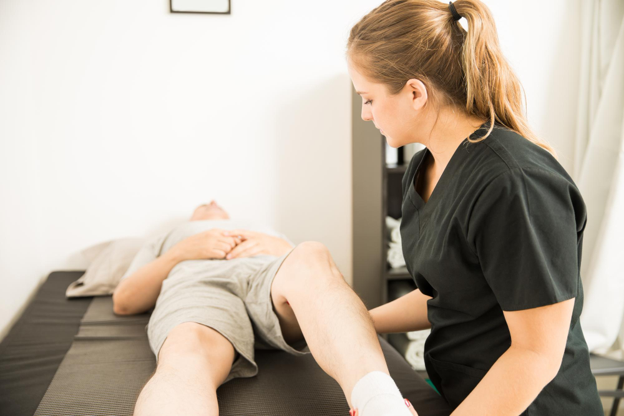
This is where knee swelling physical therapy changes the outcome. Instead of managing symptoms after the fact, a thorough evaluation identifies what's actually driving the swelling, whether that's hip weakness feeding into IT band irritation, a mechanics issue behind patellofemoral pain, or an unresolved post-surgical deficit.
From there, treatment builds the strength and movement quality needed to address the cause directly, not just quiet it down until the next workout.
What Knee Pain Physical Therapy Looks Like at Iron Health
At Iron Health, knee swelling physical therapy starts with a thorough look at your movement, strength, and mechanics, not a generic protocol handed to every knee patient.
The Process Runs in Three Steps
- Schedule your evaluation. Your first visit covers your movement, pain patterns, and training goals in detail.
- Get your personalized plan. Your plan is built around your specific findings and what you want to get back to, whether that's running, lifting, or simply climbing stairs without hesitation.
- Progress and stay strong. You work with your provider on a regular basis, adjust the plan as you improve, and move into performance training if that fits your goals.
This approach is built for active adults who don't want to keep modifying their training around knee pain. The goal isn't just less swelling. It's getting back to squatting, running, and training the way you actually want to.
Frequently Asked Questions
Is knee swelling after exercise always a bad sign?
No. Mild swelling that fades within a day or two is a normal response to training load. It becomes a concern when it repeats every session, lasts several days, or comes with pain, locking, or instability.
When should I see someone for knee swelling physical therapy instead of just resting?
If swelling keeps returning despite rest, or if you're modifying your workouts to avoid triggering it, that's a sign the underlying cause needs to be addressed rather than managed around.
Can physical therapy help knee swelling from osteoarthritis?
Yes. Strength and movement-focused physical therapy is one of the most effective ways to manage osteoarthritis-related swelling and stiffness while staying active long term.
How long does it take to see results from knee swelling physical therapy?
It varies by condition and how long the pattern has been going on. A thorough evaluation gives a realistic timeline based on your specific findings, not a generic estimate.
Will I need to stop training completely while I address knee swelling?
Usually not. Treatment is built around keeping you as active as possible while addressing the cause, rather than shutting down your training entirely.
Getting Back to Training Without the Guesswork
Occasional post-workout puffiness is normal. Swelling that keeps returning, lingers for days, or comes with pain and instability is worth a closer look before it becomes a bigger problem.
Knee swelling physical therapy at Iron Health starts with finding out what's actually driving your symptoms, then builds a plan around your body and your goals so you can get back to training without working around your knee. If that recurring swelling sounds familiar, book an evaluation and get a clear answer instead of another guess.